Egocentric vs. Exocentric Data: Choosing the Right Viewpoint
A buyer’s guide to first-person, third-person, and synchronized capture for robotics and physical AI.
Read Guide ↗Paired perspective / 03
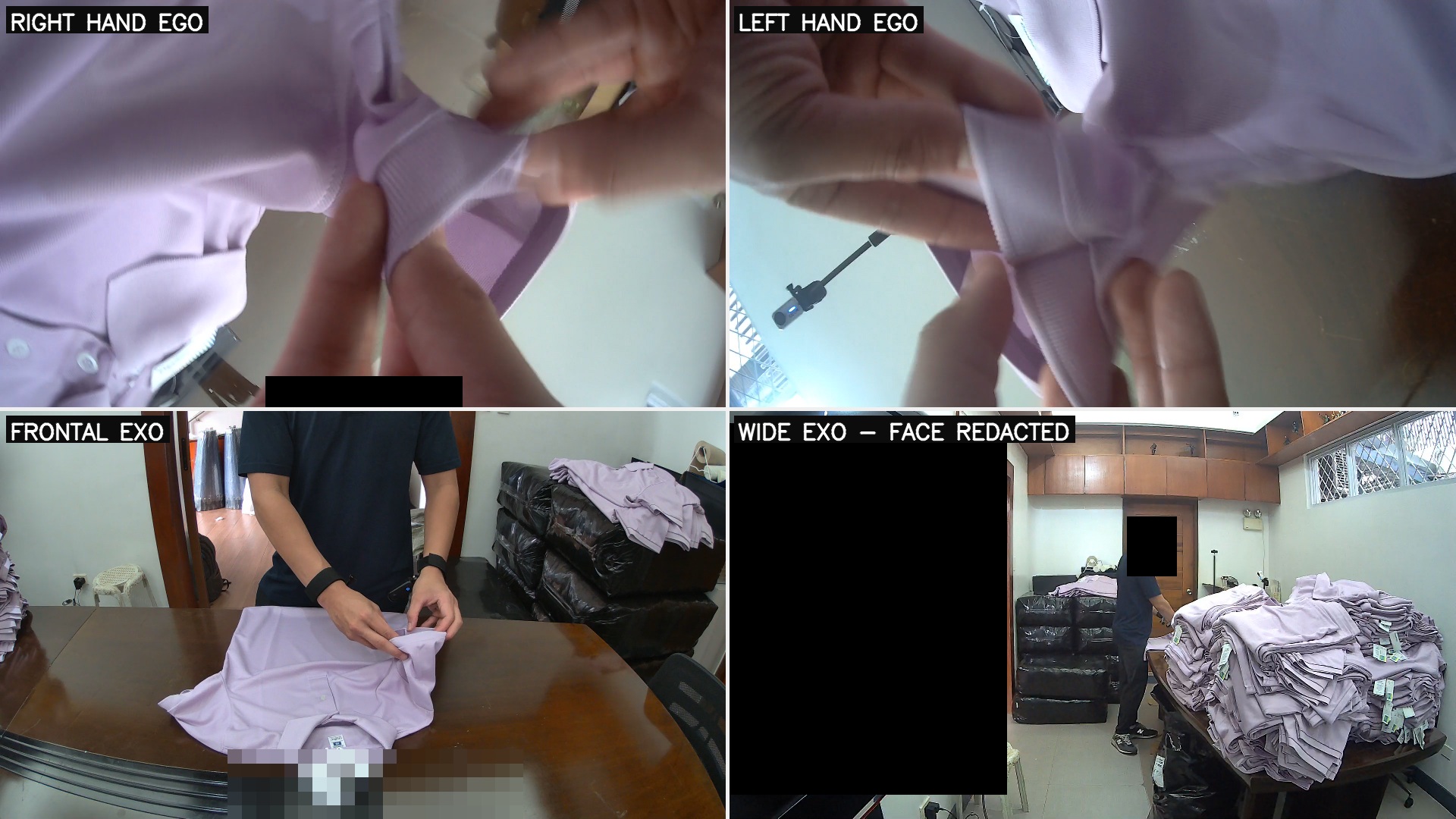
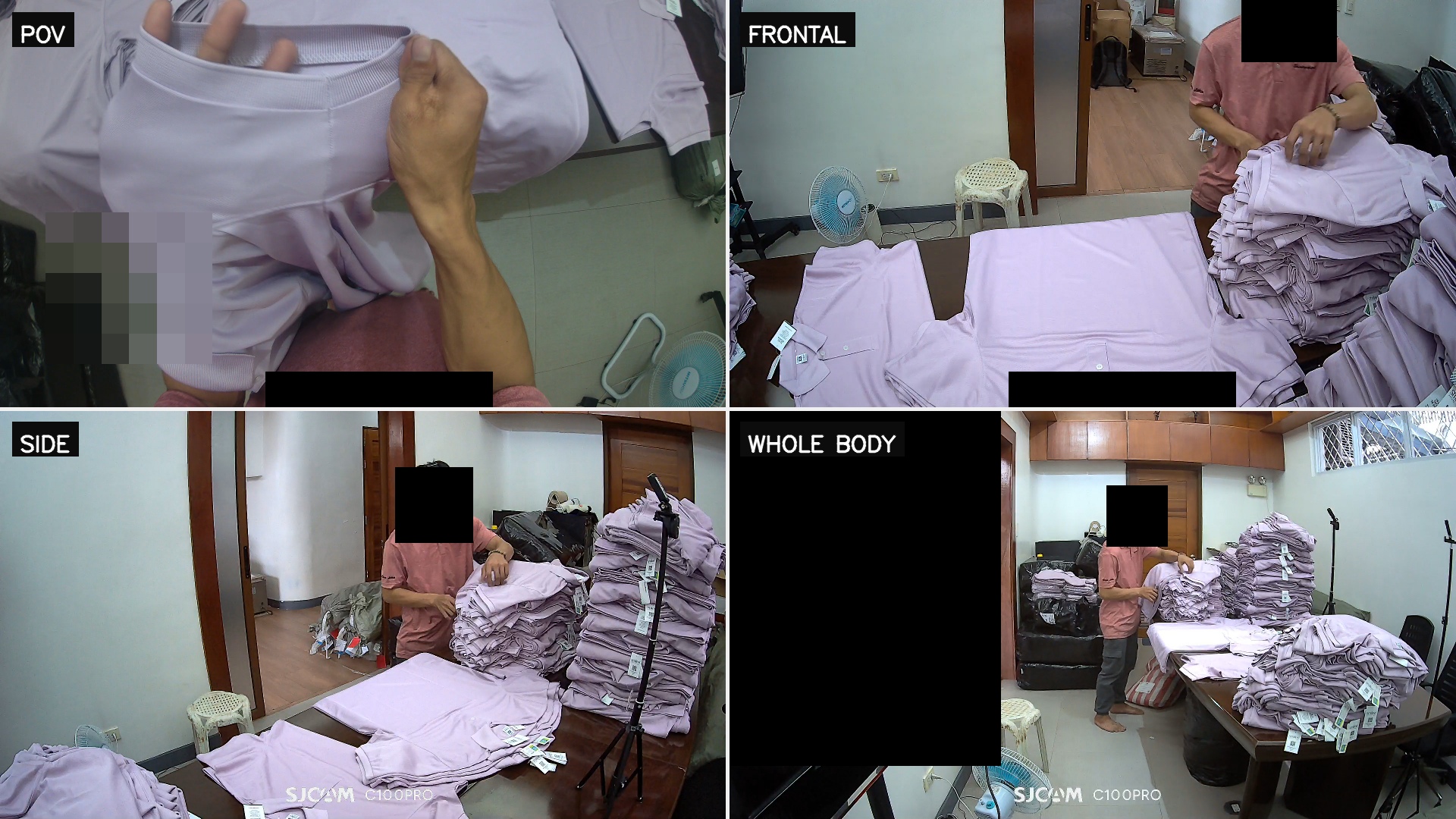
Synchronized ego/exo data connects what the actor could see with what the environment reveals—supporting cross-view correspondence, occlusion recovery, and learning across embodiments.
Actor-visible intent, hands, objects, and local state.
Whole-body motion, geometry, context, and hidden events.
Concurrent recording is not enough. The dataset needs evidence that streams correspond in time, space, task, and identity.
Declare the clock source, timestamps, trigger method, acceptable drift, and long-take verification procedure.
Store camera intrinsics, extrinsics, coordinate frames, recalibration events, and known spatial error.
Map takes, actors, objects, tasks, and annotations across views without exposing personal identity.
Use cases
Every criterion should be measurable before collection expands.
Maximum drift, missing frames, clock resets, and verification points.
Coordinate conventions, error tolerance, scene changes, and recalibration.
Critical actions visible in one or both views with documented occlusion limits.
Stable take, stream, task, and annotation keys across the synchronized release.
Each view cleared for its intended use and distribution tier.
Buyer loader proves aligned decoding, timestamps, and episode boundaries.
Paired pilot
Tell us the views, task, time tolerance, calibration needs, modalities, and target representation.
Scope Paired Capture